
TPE Overmolding: What It Is, How It Works, and When to Use It Think of…
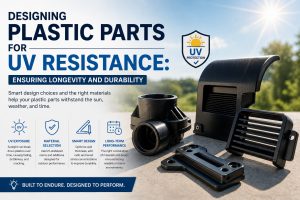
Designing Plastic Parts for UV Resistance: Ensuring Longevity and Durability
Introduction:
Plastic materials have become an integral part of our everyday lives, finding applications in various industries and products. However, exposure to ultraviolet (UV) radiation from the sun or artificial sources can significantly impact the longevity and performance of plastic parts. Over time, UV radiation can cause fading, discoloration, embrittlement, and degradation of plastic components. Therefore, when designing plastic parts, it is crucial to consider UV resistance to ensure their durability and aesthetic appeal. In this article, we will explore key considerations and strategies for designing plastic parts that can withstand UV exposure.
Understanding UV Radiation:
UV radiation is a form of electromagnetic radiation with shorter wavelengths than visible light. It is categorized into three main types: UVA, UVB, and UVC. UVA radiation has the longest wavelength and is the least harmful, while UVB and UVC radiation are more damaging to materials and living organisms. UV radiation causes a series of chemical reactions within the polymer structure, leading to degradation and deterioration of plastic parts.
Selecting UV-Resistant Materials:
Choosing the right plastic material is the first step in designing UV-resistant parts. Not all plastics exhibit the same level of resistance to UV radiation. Polymers such as polypropylene (PP), polyethylene (PE), polycarbonate (PC), acrylonitrile butadiene styrene (ABS), and polyvinyl chloride (PVC) generally offer good UV resistance. However, materials like polyethylene terephthalate (PET), polystyrene (PS), and polyamide (PA) are more susceptible to UV degradation.
Additionally, various additives can enhance UV resistance in plastics. Ultraviolet stabilizers, such as hindered amine light stabilizers (HALS) and UV absorbers, can be incorporated into the plastic formulation to mitigate the harmful effects of UV radiation. These additives help absorb and dissipate UV energy, preventing it from reaching the polymer chains and reducing degradation.
Design Considerations:
- Geometry and Surface Area: Reducing the exposure of plastic parts to direct sunlight by considering the geometry and surface area is crucial. Designers should aim to minimize flat and large surfaces, as they are more prone to UV damage. Incorporating curves, ribs, or other design elements can help diffuse UV radiation and reduce its impact on the plastic.
- Pigmentation: Darker pigments tend to absorb more UV radiation, causing faster degradation. Lighter colors or UV-stabilized pigments can be used to minimize the impact of UV exposure. It is also important to consider the color-fastness of the pigment, as some may fade or change color over time.
- Coatings and Treatments: Applying protective coatings or surface treatments can enhance the UV resistance of plastic parts. UV-blocking coatings, such as acrylic or polyurethane clear coats, can act as a barrier, preventing UV radiation from reaching the underlying plastic. Additionally, specialized surface treatments like UV-resistant paints or metallization can provide an extra layer of protection.
- Encapsulation and Enclosure: When designing plastic parts that house sensitive components or electronics, it is essential to consider enclosing them in UV-resistant materials or adding UV-blocking barriers. This prevents direct UV exposure and safeguards the internal components from degradation.
Testing and Validation:
Designing for UV resistance should be accompanied by thorough testing and validation. Accelerated weathering tests, such as UV exposure chambers or xenon arc weatherometers, can simulate long-term UV exposure in a short period. These tests help evaluate the performance and durability of plastic parts under different UV exposure conditions, aiding in selecting the most suitable materials and designs.